Thanks to the work of NEI scientists and grantees, we’re constantly learning new information about the causes and treatment of vision disorders. Get the latest updates about their work — along with other news about NEI.
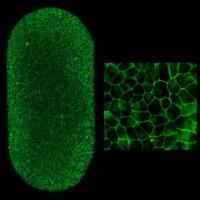
Researchers from the National Eye Institute (NEI) have developed a gene therapy that rescues cilia defects in retinal cells affected by a type of Leber congenital amaurosis (LCA), a disease that causes blindness in early childhood.
The patient received the therapy as part of a clinical trial that is the first in the United States to use replacement tissues from patient-derived induced pluripotent stem cells.
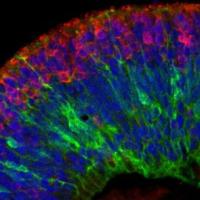
Three scientific teams that developed physiologically competent retinal organoid systems have won the final phase of the 3D Retinal Organoid Challenge (3D ROC).
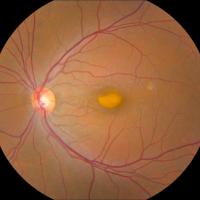
Using a new imaging technique, researchers from the National Eye Institute have determined that retinal lesions from vitelliform macular dystrophy (VMD) vary by gene mutation.
NEI researcher Mitra Farnoodian Tedrick, Ph.D., received a $65,000 grant from the Knights Templar Eye Foundation (KTEF) to identify drugs to treat a rare blinding condition called Stargardt disease.
A new report outlines progress toward the National Eye Institute's Audacious Goals Initiative (AGI), an effort to restore vision through research in regenerative medicine. The report, published in Nature Medicine.
Researchers from the National Eye Institute (NEI) have identified a new disease that affects the macula, a small part of the light-sensing retina needed for sharp, central vision.
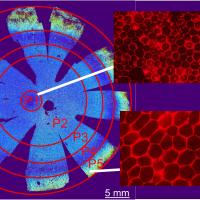
Researchers have identified distinct differences among the cells comprising a tissue in the retina that is vital to human visual perception. The scientists from the National Eye Institute (NEI) discovered five subpopulations of retinal pigment epithelium.