Thanks to the work of NEI scientists and grantees, we’re constantly learning new information about the causes and treatment of vision disorders. Get the latest updates about their work — along with other news about NEI.
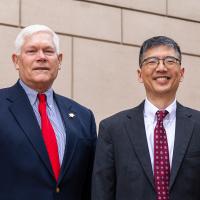
Texas Congressman Pete Sessions visited the NIH March 27 to meet with NEI Director Michael F. Chiang, M.D., and to tour NEI’s Section on Ocular and Stem Cell Translational Research, led by Kapil Bharti, Ph.D.
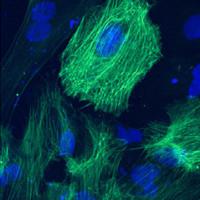
A National Eye Institute-led team has identified a compound already approved by the U.S. Food and Drug Administration that keeps light-sensitive photoreceptors alive in three models of Leber congenital amaurosis type 10 (LCA 10).
Using vision to efficiently move through an area by foot uses a unique region of the brain’s cortex, according to a small study funded by the National Eye Institute (NEI).
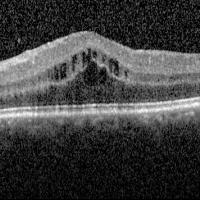
Researchers supported by the NEI are developing artificial intelligence/machine learning (AI/ML)-based systems that not only screen for AMD but also predict which patients will likely progress to late within two years.
Questions remain about artificial tears linked to an outbreak of Pseudomonas aeruginosa infections involving 68 people in 16 states, including 5 cases of vision loss, as well as lung and urinary tract infections, and one death.
While early treatment of diabetes-related eye disease slowed progression to severe disease, it did not improve visual acuity compared with treating more severe disease once it developed, according to a clinical study from the DRCR Retina Network.
Session topics included assessing the global burden of diabetes-related eye disease; preventing, treating, and managing disease; and collaborating internationally.