Thanks to the work of NEI scientists and grantees, we’re constantly learning new information about the causes and treatment of vision disorders. Get the latest updates about their work — along with other news about NEI.
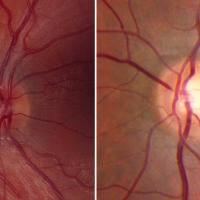
A new study indicates base editing may provide long-lasting retinal protection and prevent vision deterioration in patients with inherited retinal degeneration, specifically in Leber congenital amaurosis (LCA) patients.
The road from discovering a potential drug to getting the therapy into the hands of patients is a long and uncertain one. An NIH program called Blueprint Neurotherapeutics Network helps basic researchers prep for clinical trials and regulatory approval.
Researchers at the University of California, Berkeley, have found that a drug once widely used to wean alcoholics off of drinking helps to improve sight in mice with retinal degeneration.
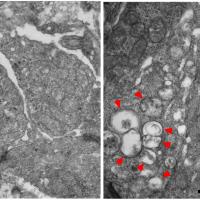
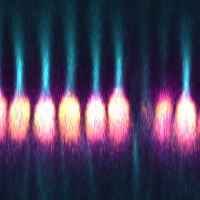
Researchers at the National Eye Institute (NEI) have discovered that power-producing organelles in the eye’s photoreceptor cells, called mitochondria, function as microlenses that help channel light to these cells’ outer segments.
A Stanford scientist and his colleagues show that patients fitted with a chip in their eye are able to integrate what the chip “sees” with objects their natural peripheral vision detects.
Researchers from the U. of Wisconsin have shown that a retinal cell type derived from human pluripotent stem cells is capable of the complex process of detecting light and converting that signal to electrical waves.
Scientists have developed an artificial intelligence system that can analyze eye scans taken during a routine visit to an optician or eye clinic and identify patients at a high risk of a heart attack.
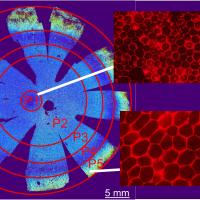
National Eye Institute researchers developed and validated an artificial-intelligence-based method to evaluate patients with Stargardt, an eye disease that can lead to childhood vision loss.