Thanks to the work of NEI scientists and grantees, we’re constantly learning new information about the causes and treatment of vision disorders. Get the latest updates about their work — along with other news about NEI.
Much like the automatic focus of a camera, our eyes and brains must constantly recalibrate so that we can get a clear view of the changing—and always moving—world around us.
A delegation from the University of the Philippines (UP) and the Philippine National Institutes of Health recently visited NEI on May 21, 2015. It was an opportunity to renew old collaborations and discuss new ones...
Through a clinical collaboration, a 34-year-old paralyzed from the neck down is the first person in the world to have a neural prosthetic device implanted in a region of the brain where intentions are made.
Two researchers funded by the National Eye Institute (NEI), both pioneers in the study of low vision, received the Helen Keller Prize for Vision Research on May 5, in Denver.
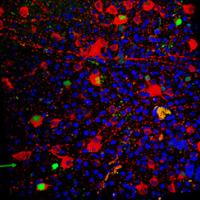
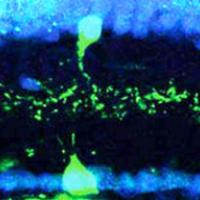
New research, published online May 7 in the journal Neuron, describes how axons of specialized nerve cells find their way through the brain’s maze of neurons to make the right connection.
Patients with acquired immunodeficiency syndrome (AIDS) have a four-fold increase in their risk of developing intermediate-stage age-related macular degeneration (AMD) compared to people of the same age who are not infected with HIV.
Gene therapy for Leber congenital amaurosis (LCA), an inherited disorder that causes vision loss starting in childhood, improved patients’ eyesight and the sensitivity of the retina within weeks of treatment.
Five bold projects will develop new technology to noninvasively image cells of the eye in unprecedented detail.The National Eye Institute (NEI) announced the awards as part of its Audacious Goals Initiative.
People with type 1 diabetes who intensively control their blood glucose (blood sugar) early in their disease, versus those who do not, are 48 percent less likely to need eye surgery, and the total number of such surgeries is 37 percent less.