Thanks to the work of NEI scientists and grantees, we’re constantly learning new information about the causes and treatment of vision disorders. Get the latest updates about their work — along with other news about NEI.
Researchers at the University of Michigan and UC Davis have solved a genetic mystery that has afflicted three unrelated families, and possibly others, for generations.
Scientists at Georgia Tech have determined the three-dimensional structure of a key part of a protein that is associated with glaucoma and identified regions of this domain that correlate with severe forms of the disease.
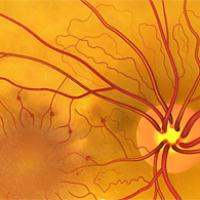
An injection of stem cells into the eye may soon slow or reverse the effects of early-stage age-related macular degeneration, according to new research from scientists at Cedars-Sinai.
The National Eye Institute (NEI) recently launched the first-ever human gene therapy trial for the vision disorder X-linked retinoschisis (XLRS). Researchers are conducting the trial at the National Institutes of Health Clinical Research Center in...
Researchers at the Louisiana State University Neuroscience Center of Excellence have discovered gene interactions that determine whether cells live or die in such conditions as age-related macular degeneration and ischemic stroke.
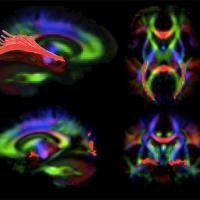
Using high-resolution functional magnetic resonance imaging (fMRI), a team of researchers from Vanderbilt and Boston universities, have discovered that more complex processing occurs in the initial stages of the visual system than previously thought.
Stem cells from the dental pulp of wisdom teeth can be coaxed to turn into cells of the eye’s cornea and could one day be used to repair corneal scarring due to infection or injury.
In an NIH-supported clinical trial comparing three drugs for diabetic macular edema (DME), Eylea (aflibercept) provided greater visual improvement, on average, than did Avastin (bevacizumab) or Lucentis (ranibizumab) when vision was 20/50 or worse.
People are bad at staying focused. We’ve all had our minds wander when we try to concentrate on a task that requires paying close attention but isn’t all that engaging.