Thanks to the work of NEI scientists and grantees, we’re constantly learning new information about the causes and treatment of vision disorders. Get the latest updates about their work — along with other news about NEI.
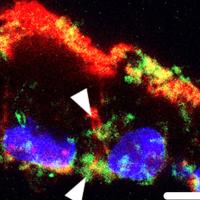
Using a new stem-cell based model made from skin cells, scientists found the first direct evidence that Stargardt-related ABCA4 gene mutations affect a layer of cells in the eye called the retinal pigment epithelium (RPE).
Scientists have discovered a mechanism by which an area of a protein shape-shifts to convert vitamin A into a usable form for the eye’s light-sensing photoreceptor cells.
A basic research study from the National Eye Institute (NEI) explains how the molecule transducin moves within light-sensing rod photoreceptors in mouse retina to help the eye quickly adapt from bright to low light and back.
National Eye Institute researchers mapped the organization of human retinal cell chromatin, the fibers that package 3 billion nucleotide-long DNA molecules into compact structures that fit into chromosomes within each cell’s nucleus.
A graduate student at the National Eye Institute, Preston volunteered this summer as a virtual instructor in the 8-week-long Journal of Emerging Investigators Mini Ph.D. Program.
The protocol gives step-by-step instructions, starting with patient-derived pluripotent stem cells, transitioning them to retinal pigment epithelium (RPE) cells and finally maturing them into RPE tissue.
Fulya Yaylacıoğlu Tuncay, M.D., Ph.D., said she gained crucial experience in translational medicine as the first participant in an ocular genetics fellowship program sponsored by NEI and the International Council of Ophthalmology.
A July 22 event welcomed 10 teens from across the country as a reward for their winning submissions to the first-ever NEI “Eye on the Future” video competition. More than 40 high-school students submitted 3-minute science-themed videos to the contest.