Skip to content

NEI Research News

Thanks to the work of NEI scientists and grantees, we’re constantly learning new information about the causes and treatment of vision disorders. Get the latest updates about their work — along with other news about NEI.

Source
943 items

Discovery in hibernating animals could extend the shelf life of cells and tissues for transplantation  

Research led by scientists at the National Eye Institute and Sun Yat-sen University, Guangzhou, China points to a potential strategy for extending the cold storage shelf life of donor cells and tissues, such as those of the pancreas.
Dr. Han-Yu Shih

DNA loops key for T cell potency

According to a new study from the National Eye Institute (NEI), the configuration of DNA loops in developing immune cells dictates how effectively the cells fight infection.
eye

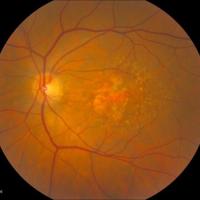
Treating AMD with anti-VEGF biosimilars is safe and cost-effective, new research says

At a fraction of the cost, biosimilars are now proven to be as effective as original anti-VEGF medications.
Elements of successful NIH grant applications

Elements of successful NIH grant applications

Perspective article aims to help beginning scientists develop thoughtful, articulate, compelling, and competitive research proposals.
A woman, putting on goggles, sits at a workbench with tools. Image in black and white.

Study explains why the brain can robustly recognize images, even without color

A new study from MIT offers a possible explanation for how the brain comes to be adept at identifying both color and color-degraded images, even though the human visual system has sophisticated machinery for processing color.
Mouse retinal blood vessels

How neurons build a 3-D vascular structure to keep the retina healthy

Researchers at UC San Francisco have found a new type of neuron that guides the formation of a lattice of blood vessels nourishes cells in the retina.
Schematic of Mouse arrestin-1 gene.

Study suggests high-frequency electrical ‘noise’ results in congenital night blindness

Findings from mouse study indicate how one mutation of rhodopsin may cause congenital stationary night blindness in humans.
Illustration of a DNA spiral

Scientists unravel genetic basis for neurodegenerative disorders that affect vision

Led by researchers at the National Institutes of Health (NIH), a team of scientists has uncovered the complex molecular mechanisms underlying neurodegenerative disorders linked to the gene PNPLA6.
microscopic image of a COVID-19 virion

COVID-19 virus could damage vision

Researchers at the University of Missouri School of Medicine have discovered that the virus that causes COVID-19 can breach the blood-retina barrier with potential long-term consequences in the eye.
Dave Steele

Blind poet visits NIH

Dave Steele, AKA The Blind Poet, brought his metered message of hope and inspiration to the NIH campus.