Skip to content

NEI Research News

Thanks to the work of NEI scientists and grantees, we’re constantly learning new information about the causes and treatment of vision disorders. Get the latest updates about their work — along with other news about NEI.

Source
467 items
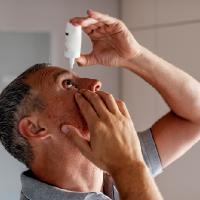
Man applies glaucoma medicine eye drops

AI used to advance drug delivery system for glaucoma and other chronic diseases

Researchers have used artificial intelligence models and machine-learning algorithms to successfully predict which components of amino acids that make up therapeutic proteins are most likely to safely deliver therapeutic drugs to animal eye cells.

NEI Scientists publish recipe for making blood vessel cells from patient stem cells

Researchers at NIH’s National Eye Institute have published a detailed protocol for making three cell types that are key components to form blood vessels and capillaries.

NEI publishes town hall report on cell-based products for treating retinal disease

The National Eye Institute has published "Stem cell sources and characterization in the development of cell-based products for treating retinal disease: An NEI town hall report."
Researchers in the laboratory.

Herpes study adds to understanding of viral reinfections, how to potentially prevent them

A new study on herpes infections of the eye from University of Illinois Chicago researchers identifies a key protein involved in viral reinfections that could be targeted by antiviral drugs.
Axon terminals of color photoreceptors

Do people and monkeys see colors the same way?

Study from University of Washington shows some nerve cell circuits for color vision are uniquely human.

Precision eye therapy for dogs ready for human clinical development

A successful gene therapy trialed at Michigan State University in dogs with an inherited eye disease is ready to be developed for clinical use in human patients with a rare condition called retinitis pigmentosa.

Medical College of Georgia scientists work to protect the vision of premature babies

Augusta University scientists have found a new target and drug that together appear to stop retinopathy of prematurity.

University of Houston researcher builds new model to examine Usher syndrome

Syndrome is a leading cause of combined deafness-blindness

Reading and visual health

Researchers at the State University of New York help explain how reading might contribute to myopia.

Extremely rare gene variants point to a potential cause of age-related macular degeneration

A study from the National Eye Institute (NEI) identified rare genetic variants that could point to one of the general mechanisms driving age-related macular degeneration (AMD), a common cause of vision loss in older adults.