Skip to content

NEI Research News

Thanks to the work of NEI scientists and grantees, we’re constantly learning new information about the causes and treatment of vision disorders. Get the latest updates about their work — along with other news about NEI.

Source
446 items
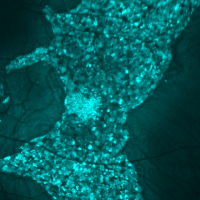
Image of an eye with choroideremia, characterized by enlarged RPE cells.

Novel imaging approach reveals important details about rare eye disease choroideremia

Researchers at the National Eye Institute (NEI) have shown for the first time how cells across different tissue layers in the eye are affected in people with choroideremia, a rare genetic disorder that leads to blindness.
Retinal organoid with green photoreceptor outer segments.

NIH researchers develop gene therapy for rare ciliopathy

Researchers from the National Eye Institute (NEI) have developed a gene therapy that rescues cilia defects in retinal cells affected by a type of Leber congenital amaurosis (LCA), a disease that causes blindness in early childhood.
blank

First U.S. patient receives autologous stem cell therapy to treat dry AMD

The patient received the therapy as part of a clinical trial that is the first in the United States to use replacement tissues from patient-derived induced pluripotent stem cells.
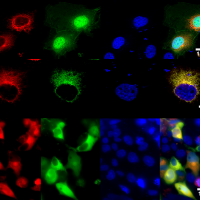
Fluorencent microscope image of retinal organoid colored in red, blue and green

Three teams win NIH’s 3D Retinal Organoid Challenge

Three scientific teams that developed physiologically competent retinal organoid systems have won the final phase of the 3D Retinal Organoid Challenge (3D ROC).
Dr. Michael Steinmetz

NEI mourns the loss of Dr. Michael Steinmetz

The director of the NEI Division of Extramural Science Programs (DESP), passed away on July 30 following a boating accident.
Image of retina

High-tech imaging reveals details about rare eye disorder

Using a new imaging technique, researchers from the National Eye Institute have determined that retinal lesions from vitelliform macular dystrophy (VMD) vary by gene mutation.

NIH study finds loss of ‘youth’ protein may drive aging in the eye

Loss of the protein pigment epithelium-derived factor (PEDF), which protects retinal support cells, may drive age-related changes in the retina, according to a new study in mice from the National Eye Institute.
Chirag Jhaveri, MD, examines the eyes of a patient.

A type of ‘step therapy’ is an effective strategy for diabetic eye disease

Clinical trial results from the DRCR Retina Network suggest that a specific step strategy gives results similar to starting off with the higher-priced drug.
Vision and non-vision functions use different neuronal circuits in the retina.

NIH researchers decode retinal circuits for circadian rhythm, pupillary light response

The eye’s light-sensing retina taps different circuits depending on whether it is generating image-forming vision or carrying out a non-vision function such as regulating pupil size or sleep/wake cycles, according to a new mouse study.
Illustration of a woman wearing sunglasses and a hat.

Protecting your eyes from the sun’s UV light

Did you know the sun's ultraviolet (UV) rays can also damage the eyes? Here are some common questions and answers about UV light and how to protect your eyes from the sun.