Skip to content

NIH Websites Are Changing

Beginning in late July, NIH will start introducing a new website experience designed to make it easier to find health information, research, funding opportunities, and other resources. During the transition, you may notice changes to navigation, page layouts, and where some information is located. Learn more in our Frequently Asked Questions.

NEI Research News

Thanks to the work of NEI scientists and grantees, we’re constantly learning new information about the causes and treatment of vision disorders. Get the latest updates about their work — along with other news about NEI.

Source
155 items
Vegetables and fish on kitchen counter

Diet may help preserve cognitive function

According to a recent analysis of data from two major eye disease studies, adherence to the Mediterranean diet – high in vegetables, whole grains, fish, and olive oil – correlates with higher cognitive function.
Images of dry AMD retina

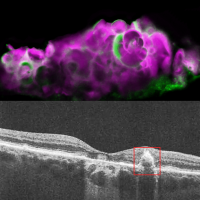
NIH researchers discover tooth-enamel protein in eyes with dry AMD

A protein that normally deposits mineralized calcium in tooth enamel may also be responsible for calcium deposits in the back of the eye in people with dry age-related macular degeneration (AMD).
Eye chart for testing vision

Therapy could improve, prolong sight in those suffering vision loss

Millions of Americans are progressively losing their sight as cells in their eyes deteriorate, but a new therapy developed by researchers at the University of California, Berkeley, could help prolong useful vision and delay total blindness.
Patient undergoes and eye exam. Courtesy National Eye Institute.

For Aging Patients, One Missed Doctor’s Visit Can Lead to Vision Loss

Missing a single ophthalmology appointment over a two-year period was associated with decreased visual acuity for patients with macular degeneration according to a new Penn Medicine study.
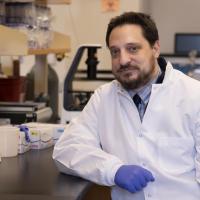
Brad Gelfand, Ph.D., in the laboratory

Potential Way to Halt Blinding Macular Degeneration Identified

Researchers at the University of Virginia have successfully treated age-related macular degeneration (AMD) in mice after finding an unexpected link between the two main forms of the blinding eye disease.
Schematic showing how to produce iPS cells

NIH launches first U.S. clinical trial of patient-derived stem cell therapy to replace and repair dying cells in retina

Researchers at the National Eye Institute (NEI) are launching a clinical trial to test the safety of a novel patient-specific stem cell-based therapy to treat geographic atrophy, the advanced “dry” form of age-related macular degeneration.
Image of scanning electron micrograph

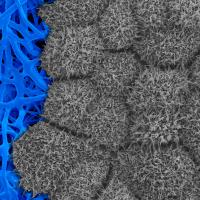
NIH, NIST researchers use artificial intelligence for quality control of stem cell-derived tissues

Researchers used artificial intelligence (AI) to evaluate stem cell-derived “patches” of retinal pigment epithelium (RPE) tissue for implanting into the eyes of patients with age-related macular degeneration (AMD), a leading cause of blindness.
Diagram of RPE cell loss

Report: Dry AMD requires broad, systems biology approach leveraging big data, multiple disciplines

A large-scale, collaborative, systems biology approach is needed to expedite the discovery of treatments for dry age-related macular degeneration (AMD) – a leading cause of blindness among people 65 and older for which is there is no treatment.
Grantee News

Experimental Drug Delivers One-Two Punch to Vision Loss

In studies with lab-grown human cells and in mice, Johns Hopkins Medicine researchers have found that an experimental drug may be twice as good at fighting vision loss as previously thought.
Greens, beans and dairy products arranged on a table

NIH Study Finds No Evidence That Calcium Increases Risk of AMD

Eating a calcium-rich diet or taking calcium supplements does not appear to increase the risk of age-related macular degeneration (AMD), according to the findings of a study by scientists at the National Eye Institute (NEI).