Thanks to the work of NEI scientists and grantees, we’re constantly learning new information about the causes and treatment of vision disorders. Get the latest updates about their work — along with other news about NEI.
Researchers funded by the National Eye Institute (NEI) have identified 133 genetic variants that predict with 75-percent accuracy a person’s risk for developing glaucoma related to elevated pressure within the eye.
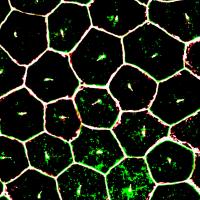
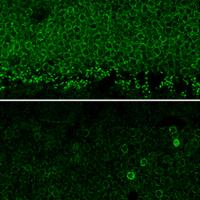
Scientists at the National Eye Institute (NEI) report that tiny tube-like protrusions called primary cilia on cells of the retinal pigment epithelium (RPE) are essential for the survival of the retina’s light-sensing photoreceptors.
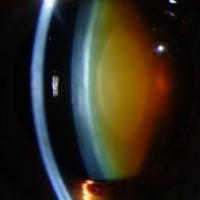
Research funded by the National Eye Institute aims to reverse progression of cataracts—the most common cause of blindness worldwide—or to prevent them from forming altogether.
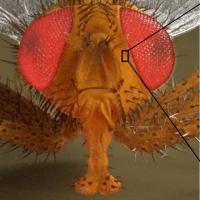
Six biological pigments called rhodopsins play well-established roles in light-sensing in the fruit fly eye. Three of them also have light-independent roles in temperature sensation.
An international study of more than 5,417 people helps pinpoint the genetic risk factors associated with Fuchs endothelial corneal dystrophy, the most common disorder requiring corneal transplantation.
Silencing a gene called Nrl in mice prevents the loss of cells from degenerative diseases of the retina, according to a new study. The findings could lead to novel therapies for preventing vision loss from human diseases such as retinitis pigmentosa.
Researchers at the National Eye Institute (NEI), part of the National Institutes of Health, have identified the genetic underpinnings of a rare disorder that causes children to be born with deafness, blindness, albinism and fragile bones.
NEI-funded researchers at Columbia University Medical Center have shown that vision loss associated with a form of retinitis pigmentosa can be slowed dramatically by reprogramming the metabolism of photoreceptors, or light sensors, in the retina.