

Thanks to the work of NEI scientists and grantees, we’re constantly learning new information about the causes and treatment of vision disorders. Get the latest updates about their work — along with other news about NEI.
Questioning the belief that that people born blind could never truly understand color, a team of cognitive neuroscientists demonstrated that congenitally blind and sighted individuals actually understand it quite similarly.
Members of the Indo-U.S. Vision Research Collaborative Program gathered virtually to look back on the program’s genesis and accomplishments and to plot the program’s future.
Scientists at St. Jude Children’s Research Hospital have created a laboratory model for studying retinoblastoma driven by inherited mutations in the RB1 gene.
Researchers have developed a new gene therapy that could eventually provide an alternative treatment for Fuchs’ endothelial corneal dystrophy, a genetic eye disease affecting roughly one in 2,000 people globally.
Neural circuits in the primate retina can generate the information needed to predict the path of a moving object before visual signals even leave the eye, UW Medicine researchers demonstrate in a new paper.
Two translational studies at the Vanderbilt Eye Institute are targeting photoreceptors and retinal ganglion cells (RGCs) to restore vision through regeneration of the retina. The research is funded by the NEI Audacious Goals Initiative.
Researchers at the National Institutes of Health have discovered that decisions based on visual information is broadcast widely to neurons in the visual system, including to those that are not being used to make the decision.
New biomarkers found in the eyes could unlock the key to helping manage diabetic retinopathy, and perhaps even diabetes, according to new research conducted at the Indiana University School of Optometry.
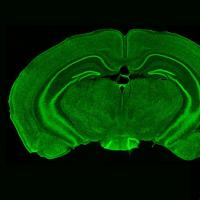
A new MIT study of how a mammalian brain remembers what it sees shows that while individual images are stored in the visual cortex, the ability to recognize a sequence of sights critically depends on guidance from the hippocampus.