Thanks to the work of NEI scientists and grantees, we’re constantly learning new information about the causes and treatment of vision disorders. Get the latest updates about their work — along with other news about NEI.
Scientists at the National Eye Institute (NEI) have developed a promising gene therapy strategy for a rare disease that causes severe vision loss in childhood.
National Eye Institute (NEI) researchers profiling epigenomic changes in light-sensing mouse photoreceptors have a clearer picture of how age-related eye diseases may be linked to age-related changes in the regulation of gene expression.
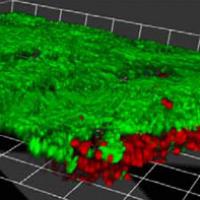
Researchers have discovered a technique for directly reprogramming skin cells into light-sensing rod photoreceptors used for vision. The lab-made rods enabled blind mice to detect light after the cells were transplanted into the animals’ eyes.
National Eye Institute scientists led a collaborative study and zeroed in on genes associated with age-related macular degeneration (AMD), a leading cause of vision loss and blindness among people age 65 and older.
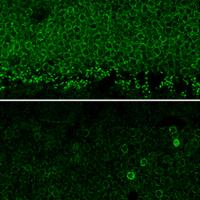
Silencing a gene called Nrl in mice prevents the loss of cells from degenerative diseases of the retina, according to a new study. The findings could lead to novel therapies for preventing vision loss from human diseases such as retinitis pigmentosa.
Combinations of Food and Drug Administration-approved drugs protect against the loss of cells required for vision in a mouse model of blinding retinal diseases.
Retinas from our earliest vertebrate ancestors had cone-like photoreceptors, presumably allowing them to see in daylight, but little ability to see at night.
Our eyes are especially demanding when it comes to energy: Along with our brain, they require a substantial amount of power to keep them functioning and healthy.
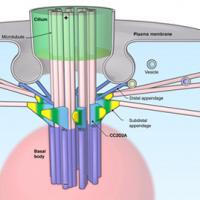
Researchers at the National Eye Institute (NEI) have described the functions of a gene responsible for anchoring cilia — sensory hair-like extensions present on almost every cell of the body.
Three studies reported in Nature Genetics have converged on the same gene as a rare, but powerful risk factor for age-related macular degeneration (AMD), a common cause of vision loss in older people.