Thanks to the work of NEI scientists and grantees, we’re constantly learning new information about the causes and treatment of vision disorders. Get the latest updates about their work — along with other news about NEI.
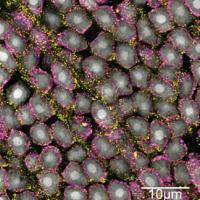
A study conducted by Scripps Research in collaboration with University of California San Diego and the Lowy Medical Research Institute finds that erucamide plays a role in how cells communicate in the retina.
A new understanding of retinal cell development may help pave the way for future retina transplants, which could restore sight to people whose conditions currently have no effective treatments
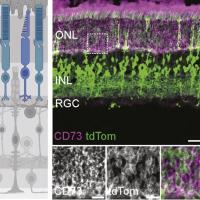
NEI scientists have found that the way the retina metabolizes glucose directly controls which genes get switched on and off in light-sensing photoreceptors.
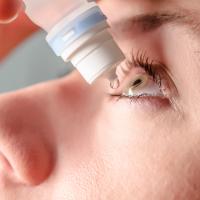
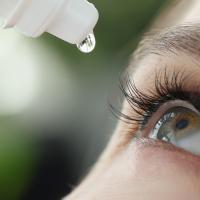
National Eye Institute-funded research at the University of Pittsburgh School of Medicine showed that an early-stage, experimental “living eye drop” that uses naturally occurring eye bacteria supports corneal wound healing.
A new National Eye Institute-funded study in mice shows that if the retina of the amblyopic eye is temporarily and reversibly anesthetized just for a couple of days, the brain’s visual response to the eye can be restored even in adulthood.
Ten teams are being recognized for their proof-of-concept ideas following Phase 1 of the Data Sharing Index (“S-Index”) Challenge, an NIH competition aimed at incentivizing data sharing
During most eye infections or injuries, neutrophils, immune cells found in the blood, are usually the first line of defense. However, new research shows retina responds differently than other tissues in the body.
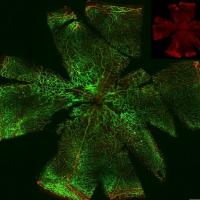
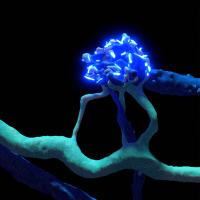
A National Eye Institute-funded research team at the University of Minnesota Medical School discovered that a cancer signaling pathway has previously unrecognized roles in retina and brain blood vessels.