NIH is moving the launch of its new website to the fall to ensure the best possible experience for everyone who relies on our websites for health information, research, funding opportunities, and other resources. Get the Latest Updates and FAQs
Thanks to the work of NEI scientists and grantees, we’re constantly learning new information about the causes and treatment of vision disorders. Get the latest updates about their work — along with other news about NEI.
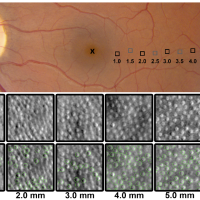
NEI researchers have created the largest known database providing a reference for the size of individual cone photoreceptors, the cells in the retina responsible for color vision, across the lifespan.
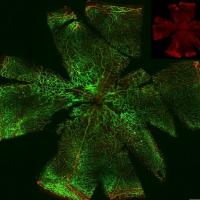
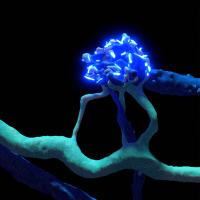
NEI-funded research at Duke University used induced pluripotent stem cells (iPSCs) to grow specialized blood vessel cells critical to retinal health for the first time.
A study conducted by Scripps Research in collaboration with University of California San Diego and the Lowy Medical Research Institute finds that erucamide plays a role in how cells communicate in the retina.
A new understanding of retinal cell development may help pave the way for future retina transplants, which could restore sight to people whose conditions currently have no effective treatments
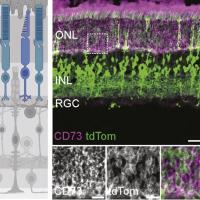
NEI scientists have found that the way the retina metabolizes glucose directly controls which genes get switched on and off in light-sensing photoreceptors.
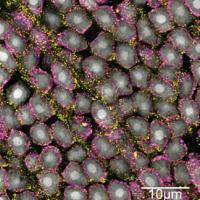
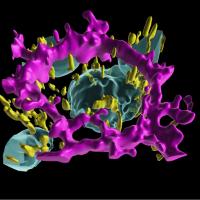
National Eye Institute (NEI) researchers have developed a digital replica of crucial eye cells, providing a new tool for studying how the cells organize themselves when they are healthy and affected by diseases.
A new study challenges the traditional understanding of disease genetics for IRDs and other rare genetic diseases according to the researchers, and may have implications for the clinical use of genetic testing and the development of new treatments.
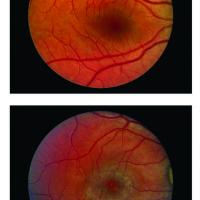
A new study spearheaded by investigators at Scripps Research and the National Eye Institute offers compelling evidence that vision loss from macular telangiectasia can be slowed with a neuroprotective surgical implant.
During most eye infections or injuries, neutrophils, immune cells found in the blood, are usually the first line of defense. However, new research shows retina responds differently than other tissues in the body.