Skip to content

NEI Research News

Thanks to the work of NEI scientists and grantees, we’re constantly learning new information about the causes and treatment of vision disorders. Get the latest updates about their work — along with other news about NEI.

Source
296 items
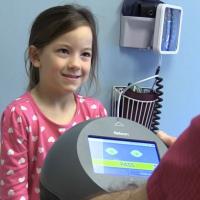
Little girl with the blinq™ device

Vision screening device improves detection of “lazy eye”

The NEI has funded development of a handheld pediatric vision scanner that easily and accurately screens for amblyopia, or “lazy eye.” The device could facilitate earlier identification of children who need vision-saving treatment.
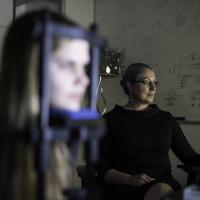
Krystel Huxlin with patient in laboratory

'Time is vision' after a stroke

A person who has a stroke that causes vision loss is often told there is nothing they can do to improve or regain the vision they have lost. But research from the University of Rochester may offer hope to stroke patients in regaining vision.
Fundus photograph of age-related macular degeneration showing drusen.

Pace of eye disease over two years predicts long-term outcome

Progression along an age-related macular degeneration (AMD) severity scale over two years predicts the likelihood of developing late-stage disease five years later.
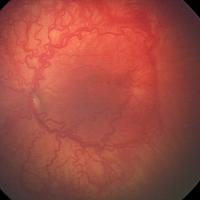
Severe ROP Avastin candidate

Very low-dose Avastin effective for preventing blindness in preterm infants

Babies born prematurely who require treatment to prevent blindness from retinopathy of prematurity (ROP) could be treated with a dose of Avastin (bevacizumab) that is a fraction of the dose commonly used for ROP currently.
Vegetables and fish on kitchen counter

Diet may help preserve cognitive function

According to a recent analysis of data from two major eye disease studies, adherence to the Mediterranean diet – high in vegetables, whole grains, fish, and olive oil – correlates with higher cognitive function.

Four in 10 US Adults Are at High Risk for Vision Loss

In 2017, approximately 93 million US adults aged 18 years or older, or about 4 in 10, were at high risk for vision loss, according to a new study published in JAMA Ophthalmology.
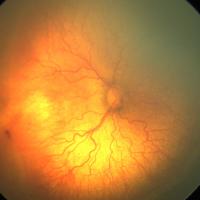
A fundus image

AI may help spot newborns at risk for most severe form of blinding disease

An artificial intelligence (AI) device that has been fast-tracked for approval by the Food and Drug Administration may help identify newborns at risk for aggressive posterior retinopathy of prematurity (AP-ROP). AP-ROP is the most severe form of ROP.
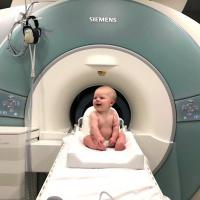
A baby sitting in front of an MRI machine

Earliest look at newborns' visual cortex reveals the minds babies are born with

According to a study from Emory University, as young as six days a baby’s brain appears hardwired for the specialized tasks of seeing faces and seeing places.
Patient undergoes and eye exam. Courtesy National Eye Institute.

For Aging Patients, One Missed Doctor’s Visit Can Lead to Vision Loss

Missing a single ophthalmology appointment over a two-year period was associated with decreased visual acuity for patients with macular degeneration according to a new Penn Medicine study.
Man reading a book

Reward improves visual perceptual learning — but only after people sleep

A new study from Brown researchers finds that rewards improve performance on a visual perceptual task only if participants sleep after training.