Skip to content

NEI Research News

Thanks to the work of NEI scientists and grantees, we’re constantly learning new information about the causes and treatment of vision disorders. Get the latest updates about their work — along with other news about NEI.

Source
179 items
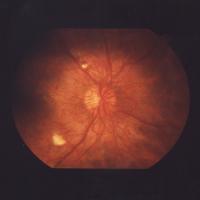
Image of retina

Researchers seek new treatment for blinding diseases AMD and Stargardt

Research team has identified advanced preclinical candidates targeting the bisretinoid synthesis pathway, which could help treat macular degeneration and Stargardt disease.
Farmer

Social determinants of health associated with diabetic eye-care quality

New data demonstrate how social determinants of health can fuel disparities in monitoring for diabetic retinopathy for patients of different racial and ethnic groups.
fundus photo showing diabetic retinopathy

Medical College of Georgia scientists searching for new treatment target for diabetic retinopathy

Researchers are searching for a new treatment target for a common complication of diabetes that can cause retinal blood vessels to break down, leak or become blocked.
Two boys smile at the camera. Asymmetric dark spots block parts of the image, representing vision loss from diabetic retinopathy.

New UH study targets early signs of vision loss in diabetic patients

A new study at the University of Houston College of Optometry will track the health of patients with prediabetes and diabetes to find out who might develop eye problems and be at risk for future vision loss.
decorative

NIH researchers discover potential therapeutic target for degenerative eye disease

Researchers from the National Institutes of Health (NIH) have discovered the source of dysfunction in the process whereby cells in the eye's retina remove waste.
Elements of successful NIH grant applications

Elements of successful NIH grant applications

Perspective article aims to help beginning scientists develop thoughtful, articulate, compelling, and competitive research proposals.
A woman, putting on goggles, sits at a workbench with tools. Image in black and white.

Study explains why the brain can robustly recognize images, even without color

A new study from MIT offers a possible explanation for how the brain comes to be adept at identifying both color and color-degraded images, even though the human visual system has sophisticated machinery for processing color.
microscopic image of a COVID-19 virion

COVID-19 virus could damage vision

Researchers at the University of Missouri School of Medicine have discovered that the virus that causes COVID-19 can breach the blood-retina barrier with potential long-term consequences in the eye.
Qiuhua Yang, Yuqing Huo and Yongeng Cai in a laboratory.

MCG scientists identify new treatment target for leading cause of blindness

A gene previously implicated in the development of atherosclerotic lesions in coronary arteries could be key to understanding why many people don’t benefit from the most used therapy for neovascular age-related macular degeneration (AMD).

New fellowship program aims to further understanding of the publication process

The National Eye Institute has worked with the editors-in-chief of 7 leading vision journals to create a new two-year program: the Council of Vision Editors Fellowship Program.