Thanks to the work of NEI scientists and grantees, we’re constantly learning new information about the causes and treatment of vision disorders. Get the latest updates about their work — along with other news about NEI.
Researchers used an imaging technology called adaptive optics to identify rare cells that could help fill in the gaps in existing theories of color perception.
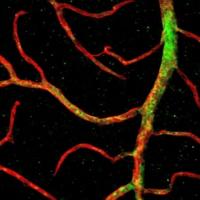
Researchers at the National Institutes of Health applied artificial intelligence (AI) to a technique that produces high-resolution images of cells in the eye. They report that with AI, imaging is 100 times faster and improves image contrast 3.5-fold.
Researchers have discovered profound similarities and surprising differences between humans and insects in the production of the critical light-absorbing molecule of the retina, 11-cis-retinal, also known as the “visual chromophore.”
Neuroscientists at Johns Hopkins Medicine have shown that intrinsically-photosensitive retinal ganglion cells use two different pathways at the same time to transmit electrical “vision” signals to the brain.
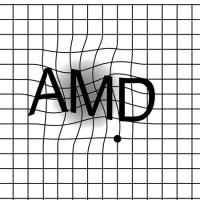
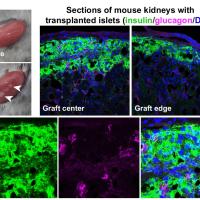
NEI researchers improved a crucial step in the production of retinal pigment epithelium (RPE), a tissue they grow in the lab from patient blood cells and are testing in a clinical trial as treatment for AMD.
The September 14 workshop brought together multidisciplinary experts in extracellular vesicles – cell-secreted nanoparticles that mediate cell-cell communication.
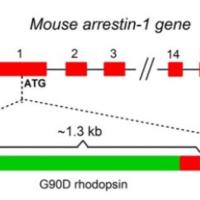
Scientists have identified a protein in the visual system of mice that appears to be key for stabilizing the body’s circadian rhythms by buffering the brain’s response to light.
In a comparative analysis across animals of the many cell types in the retina, researchers concluded that most cell types have an ancient evolutionary history.
This year, the Food and Drug Administration (FDA) approved Syfovre (pegcetacoplan) and Izervay (avacincaptad pegol), the very first drugs for treating geographic atrophy (GA), also known as late-stage “dry” age-related macular degeneration (AMD).