Thanks to the work of NEI scientists and grantees, we’re constantly learning new information about the causes and treatment of vision disorders. Get the latest updates about their work — along with other news about NEI.
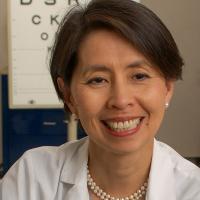
A longstanding member of the NEI/NIH community, Emily Chew, M.D., has been promoted to the title of NIH Distinguished Investigator for her tireless and prolific work as a care provider and clinical trialist.
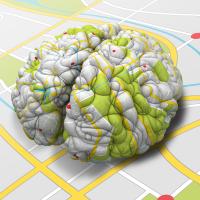
In primates, activity in the visual cortex—a part of the brain that processes signals from the eyes—is largely unaffected by the body’s own movements, according to a new study from scientists at the National Eye Institute (NEI).
The K99/R00 provides a runway for postdocs seeking to transition from mentored positions to tenure track positions at academic institutions in the U.S.
Ruchi Sharma, Ph.D., a staff scientist in the NEI Ocular and Stem Cell Translational Section, received an award from the Knights Templar Eye Foundation (KTEF), a charity sponsored by the Grand Encampment of Knights Templar.
Nitin Verma visited NIH and shared his lifetime perspective on the delivery of vision care to underserved populations in the Australia/South Pacific region—roughly 50-million people scattered across vast stretches of land and ocean.
Researchers have successfully transplanted human microglia into mouse retina to create a model for studying eye disease treatments, such as diabetic retinopathy, glaucoma and age-related macular degeneration.