
April 21, 2026
3:00 PM to 4:30 PM ET
10 Center Drive
Bethesda, MD 20892
King-Wai Yau, Ph.D.
Professor of Neuroscience
Johns Hopkins University School of Medicine
Download event program:
Light Detection by Retinal Rods and Cones
In this talk, King-Wai Yau of Johns Hopkins University presents how retinal rods and cones detect and process light at the most fundamental level. Drawing on decades of pioneering basic science research, he explains the molecular and cellular mechanisms of phototransduction, including how individual photons can be reliably detected by rod photoreceptors and how cones support vision across a wide range of light intensities and colors. The lecture highlights key experimental discoveries that shaped our current understanding of visual signaling and illustrates how fundamental research in sensory biology reveals general principles of neural function.
In accordance with updated NIH policy, all non-U.S. persons (visitors who are not a U.S. citizen or Lawful Permanent Resident) are required to complete a pre-registration form prior to arrival at NIH.
If this applies to you, please inform the NIH event organizer to add your name and email to our VisitNIH Pre-Registration Portal.
You will then receive an email from NIHvisitornotification@nih.gov, with a secure link to complete the pre-registration form. The form should take no more than 10 minutes to complete and should be completed ASAP to ensure we are able to process the details of your visit in a timely manner.
If you have any questions, please contact kathryn.demott@nih.gov. We are looking forward to your attendance!
The Foundation for the National Institutes of Health (FNIH) and the National Eye Institute (NEI) are pleased to announce that King-Wai Yau, Ph.D., from Johns Hopkins University School of Medicine, will deliver the fourth Joram Piatigorsky Basic Science Lecture and Award.
A light reception will follow the lecture. For detailed agenda and more information please visit: https://www.nei.nih.gov/research-and-training/vision-research-events/2026-piatigorsky-basic-science-lecture-award
About the Joram Piatigorsky Basic Science Lecture and Award Series
Made possible by the generous philanthropic support of Lona and Joram Piatigorsky, this series brings attention to notable basic sciences contributions by eye and vision scientists to a diverse general scientific audience, such as experts in molecular biology, genetics, developmental biology, neuroscience, and computer science. With special consideration for basic eye and vision scientists who take risks exploring little-studied species and imaginative ideas, the Lecture and Award promotes and communicates basic discoveries in eye and vision research that result in far-reaching observations that may inform widespread areas of science—from the eye to the world as it were—rather than the other way around.
About King-Wai Yau
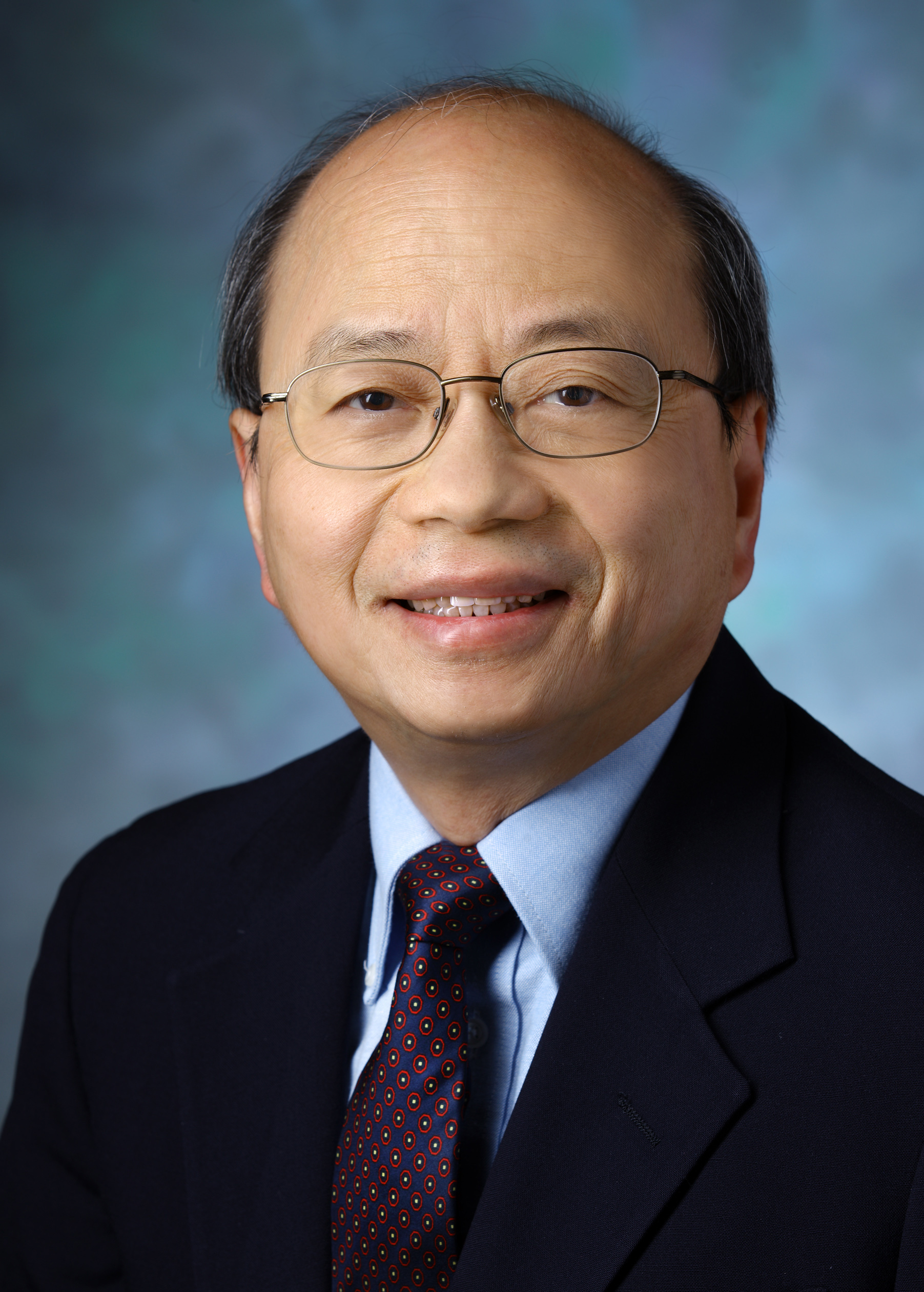
King-Wai Yau was born in Guangzhou, China in October, 1948 and grew up in Hong Kong. He has been Professor of Neuroscience at Johns Hopkins University School of Medicine since 1986.
After high school in St. Paul’s Co-Educational College in Hong Kong, he enrolled in Hong Kong University Faculty of Medicine in 1967, but left for the U.S. in 1968. He received an A.B. in physics from Princeton University in 1971 and a Ph.D. in neurobiology from Harvard University in 1975, working under Dr. John G. Nicholls. He did postdoctoral work with Denis A. Baylor at Stanford University and with Sir Alan L. Hodgkin at Cambridge University, United Kingdom. From 1980-86, he was on the faculty at the University of Texas Medical Branch at Galveston, becoming Professor of Physiology and Biophysics in 1985. Since 1986, he has been Professor of Neuroscience at Johns Hopkins University School of Medicine. He was an Investigator of the Howard Hughes Medical Institute in 1986-2004.
He is a Fellow of the American Academy of Arts and Sciences, a member of the U.S. National Academy of Sciences, U.S. National Academy of Medicine, and a member of Academia Sinica, Taiwan. His research interests lie in photoreception in the retina and olfactory reception in the nose.
Accommodations
American Sign Language interpreting services are available upon request. Individuals who need interpreting services and/or other reasonable accommodations to participate in this event, should contact Kathryn DeMott at kathryn.demott@nih.gov or the NIH Interpreting Office directly, via email, at nih@ainterpreting.com. Requests should be made at least five business days in advance in order to ensure interpreter availability.