Skip to content

NEI Research News

Thanks to the work of NEI scientists and grantees, we’re constantly learning new information about the causes and treatment of vision disorders. Get the latest updates about their work — along with other news about NEI.

Source
237 items

Study identifies "visual system" protein for circadian rhythm stability

Scientists have identified a protein in the visual system of mice that appears to be key for stabilizing the body’s circadian rhythms by buffering the brain’s response to light.
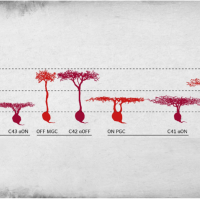
Illustration of retinal cell types, including midget cells.

Cell types in the eye have ancient evolutionary origins

In a comparative analysis across animals of the many cell types in the retina, researchers concluded that most cell types have an ancient evolutionary history.

Story of discovery: NEI-funded research paves way for new dry AMD drugs

This year, the Food and Drug Administration (FDA) approved Syfovre (pegcetacoplan) and Izervay (avacincaptad pegol), the very first drugs for treating geographic atrophy (GA), also known as late-stage “dry” age-related macular degeneration (AMD).
Emily Chew

Emily Chew named NIH distinguished investigator

A longstanding member of the NEI/NIH community, Emily Chew, M.D., has been promoted to the title of NIH Distinguished Investigator for her tireless and prolific work as a care provider and clinical trialist.
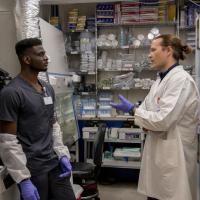
Baranov and colleague talk in the laboratory.

Mass Eye and Ear researchers develop potential glaucoma treatment strategy to guide stem cells to the retina

A multidisciplinary team led by researchers at the Schepens Eye Research Institute of Mass Eye and Ear has identified a promising new strategy for glaucoma cell replacement therapy.

Innovative research unveils potential breakthrough in diabetic retinopathy treatment

NEI-funded investigators at Washington University in St. Louis discovered a potential new treatment approach to diabetic retinopathy, one of the most common causes of vision loss in the U.S.

Putting regenerative therapies on the map

Members of the National Eye Institute's Audacious Goals Initiative (AGI) published an outline of milestones to reach before commencing clinical trials of regenerative therapies for retinal disease.
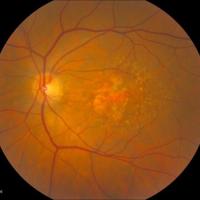
Fundus photo showing medium drusen

LSU Health New Orleans researchers discover a key failure in AMD that may lead to progression and vision loss

Research suggests that age-related macular degeneration (AMD) decreases an essential fatty acid, preventing the formation of a class of protective molecules and reducing repair potential.
Two boys smile at the camera. Asymmetric dark spots block parts of the image, representing vision loss from diabetic retinopathy.

MSU researchers discover link between cholesterol and diabetic retinopathy

Researchers found that diabetes, age-related health conditions and other metabolic disorders can lead to a buildup of cholesterol in the retina, which could contribute to diabetic retinopathy.
Rhodopsin-bound nanobodies

UC Irvine researchers discover a nanobody which may lead to treatment for retinitis pigmentosa

University of California Irvine (UCI) researchers believe they have discovered a special antibody that may lead to a treatment for an inherited eye disease called retinitis pigmentosa.