
Skip to content

NEI Research News

Thanks to the work of NEI scientists and grantees, we’re constantly learning new information about the causes and treatment of vision disorders. Get the latest updates about their work — along with other news about NEI.

Source
489 items

New UC Irvine-led study shows repeated stress accelerates aging of the eye

Researchers say findings reveal potential glaucoma drugs targets.

Putting stem cell-based therapies in context

Rogue clinics offer stem cell-based therapies that haven’t been tested for safety and efficacy. When communicating to the public about stem cell-based therapies, it is important to put any treatment claims in context.

Scientists say eye-disease drug may also help fight COVID

A UCLA-led group found that the eye drug verteporfin stops replication of SARS-CoV-2, the virus that causes COVID-19.

Seeing in 3D

Columbia University researchers examined what goes wrong in the eyes of mice with albinism.
Face-on view of an iris and pupil

National Institutes of Health awards Case Western Reserve University $7.3M for eye research

NEI grant will support examining impact of pain and inflammation on eye’s surface and possible link to diseases.
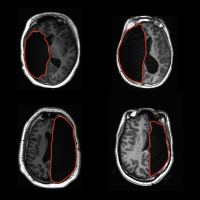
Top-down sectional views of 4 brain scans, showing missing hemispheres.

Word and face recognition can be adequately supported with half a brain, study finds

An unprecedented study of brain plasticity and visual perception found that people who, as children, had undergone surgery removing half of their brain correctly recognized differences between pairs of words or faces more than 80% of the time.
Long distance connections in the brain.

Haven’t I seen this before? Study offers new insights into how the brain separates perception from memory

The brain works in fundamentally different ways when remembering what we have seen compared to seeing something for the first time, a team of scientists has found.

Powerful enzyme that tamps down inflammation holds promise for protecting eyes in diabetes, premature birth

An enzyme under study to treat certain cancers is also showing promise in reducing the significant vision damage that can result from diabetes and premature birth, scientists report.
LCA is an inherited disorder that causes vision loss in childhood. It primarily affects the functioning of the retina, the light-sensitive tissue at the back of the eye, as shown here. Photo credit: National Eye Institute

Eye-opening discovery about adult brain’s ability to recover vision

University of California, Irvine team demonstrates the adult brain has the potential to partially recover from inherited blindness.
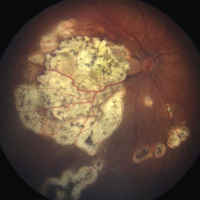
Fundus photo showing large white patches

Researchers discover new molecular driver of retinoblastoma

Study from UT Southwestern Medical Center could lead to new treatments for deadly childhood eye cancer.