Skip to content

NIH Websites Are Changing

NIH is moving the launch of its new website to the fall to ensure the best possible experience for everyone who relies on our websites for health information, research, funding opportunities, and other resources.
Get the Latest Updates and FAQs

Research and Training

The National Eye Institute is the lead federal agency for vision research. As part of the National Institutes of Health, NEI safeguards our sight by advancing the prevention and treatment of eye diseases and vision problems. 

Research we Conduct

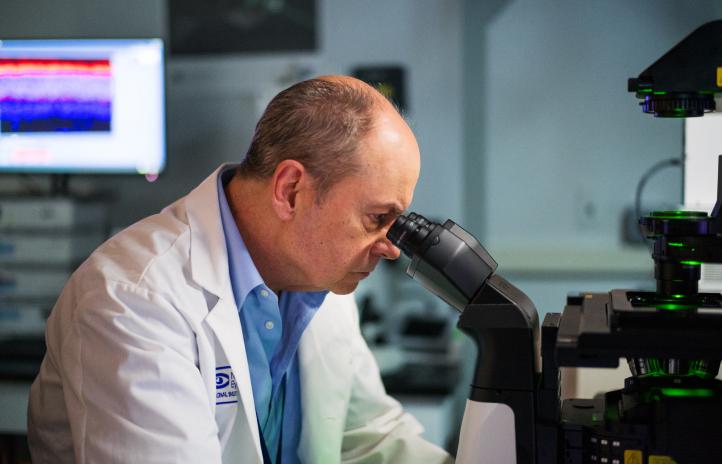
NEI’s intramural research program conducts vision research science and ophthalmology at the main NIH campus in Bethesda, Maryland. In addition to being our in-house home for groundbreaking research, our program is an incubator for the next generation of vision researchers.

  • Research Labs and Branches

    NEI scientists are part of the National Institutes of Health Intramural Research Program (IRP), the largest biomedical research institution in the world. From eye disease to gene therapy, our staff scientists, fellows, and students are discovering the future of vision research.

  • Training Opportunities

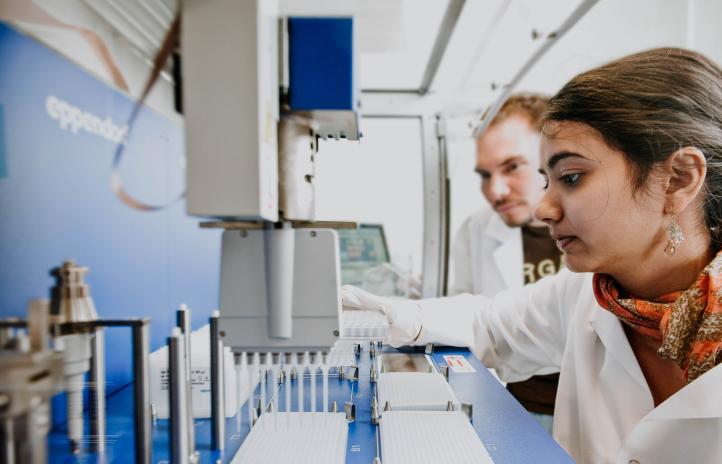
    Interested in vision research? NEI has a broad range of opportunities for students and professionals, including internships and fellowships, and training programs at our labs in Bethesda, Maryland. We also support opportunities at institutions throughout the country.

Research we Support

NEI funds extramural research that aligns with our mission to eliminate vision loss and approve quality of life through vision research. Find funding opportunities and learn how to apply below.

  • Funding Opportunities

    Explore NIH’s Grants & Funding search page (from the Office of Extramural Research) to find up-to-date information about NIH funding, including all NEI-related programs and opportunities.

  • How to Apply

    Get an overview of the application process, read tips on how to develop your proposal, and see current funding opportunities and research priorities. 

  • Technology Transfer

    The NEI Technology Transfer Office (NEI TTO) works closely with NEI investigators to facilitate development of novel inventions and collaborative relationships between NEI and the broader scientific community.

Vision Research News

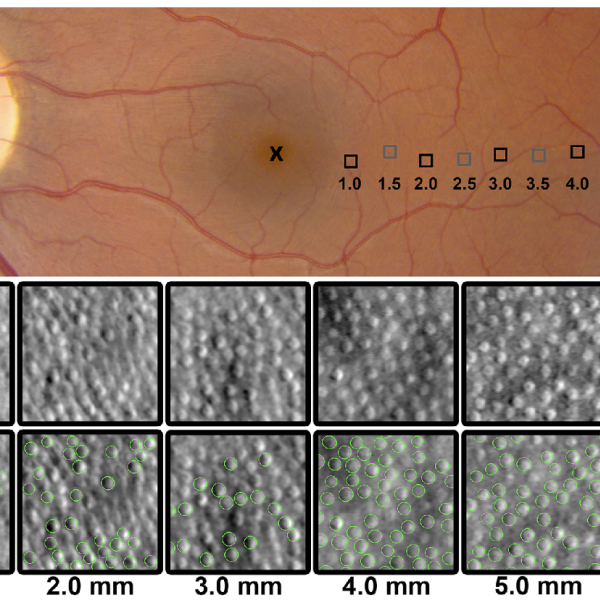
  1. NIH researchers build first large-scale database of cone photoreceptor cell size in the living human eye

    NEI researchers have created the largest known database providing a reference for the size of individual cone photoreceptors, the cells in the retina responsible for color vision, across the lifespan.

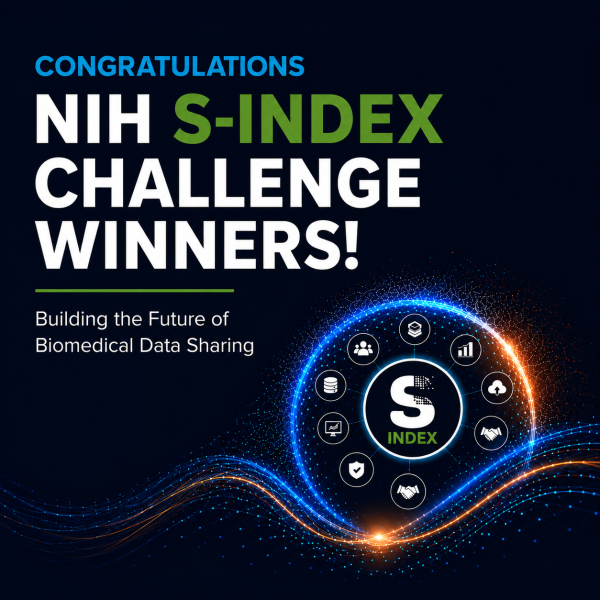
  2. NIH announces winners of S-index Challenge to advance data sharing across biomedical research

    In the 21st century, biomedical science is increasingly based on “big data”. The National Institutes of Health (NIH) is aiming to ensure that researchers who generate and share high-quality datasets receive recognition.

  3. NEI-funded research grows retinal blood vessel cells

    NEI-funded research at Duke University used induced pluripotent stem cells (iPSCs) to grow specialized blood vessel cells critical to retinal health for the first time.

Upcoming Events

  1. Robert H. Wurtz Award & Lecture in Systems Neuroscience

    September 29, 2026 — 3:00 pm to 5:00 pm ET

    Bethesda, MD

    Strategic Problem Solving in the Primate Brain

    Mehrdad Jazayeri, Ph.D.
    Massachusetts Institute of Technology
    Howard Hughes Medical Institute

    Award Presentation and Lecture
    Reception to follow

    About the Speaker

    Mehrdad Jazayeri

    Dr. Jazayeri is an investigator and professor at the Howard Hughes Medical Institute and the McGovern Institute for Brain Research at MIT, where his lab studies how neural circuits give rise to the mind, combining cognitive science, neuroscience, and machine learning across humans, nonhuman primates, and artificial agents. He received his bachelor's degree in electrical engineering from Sharif University of Technology, his master's degree in physiology from the University of Toronto, and his Ph.D. in neuroscience from New York University, studying how the brain decodes sensory signals to guide perceptual decisions. He did his postdoctoral work at the University of Washington as a Helen Hay Whitney Fellow, studying how the brain uses Bayesian computations to guide flexible timing behavior. He started his laboratory at MIT in 2013 as an assistant professor, became associate professor in 2018 and full professor in 2024, and joined HHMI as an Investigator in 2024. He has received a Vannevar Bush Faculty Fellowship, an NIH Outstanding Investigator Award, a McKnight Scholars Award, a Klingenstein-Simons Fellowship Award, a Sloan Research Fellowship, and multiple MIT teaching awards. Dr. Jazayeri's laboratory uses a combination of psychophysics, electrophysiology, and computational modeling to understand how neural dynamics in cortical and subcortical circuits support higher cognitive function. Most recently, his group has extended their work to study mental navigation, hierarchical reasoning, strategic problem solving, and social inference, with the goal of understanding how these cognitive functions are disrupted in neurological and psychiatric disorders.


    About the Artwork

    Each recipient of the Robert H. Wurtz Award is presented with a framed original mixed-media work of art from a series called "Pathways", created by Sheila Giolitti, an artist based in Norfolk, Virginia and represented locally by the Adah Rose Gallery. To learn more about her work, visit sheilagiolitti.com


    empty


    For videocast link and more information, see: 

Our Impact

Supporting Visionaries

NEI supports the next generation of scientists and innovators in vision research. Get an inside look at how NEI-funded scientists find their footing, and change lives, in vision research.
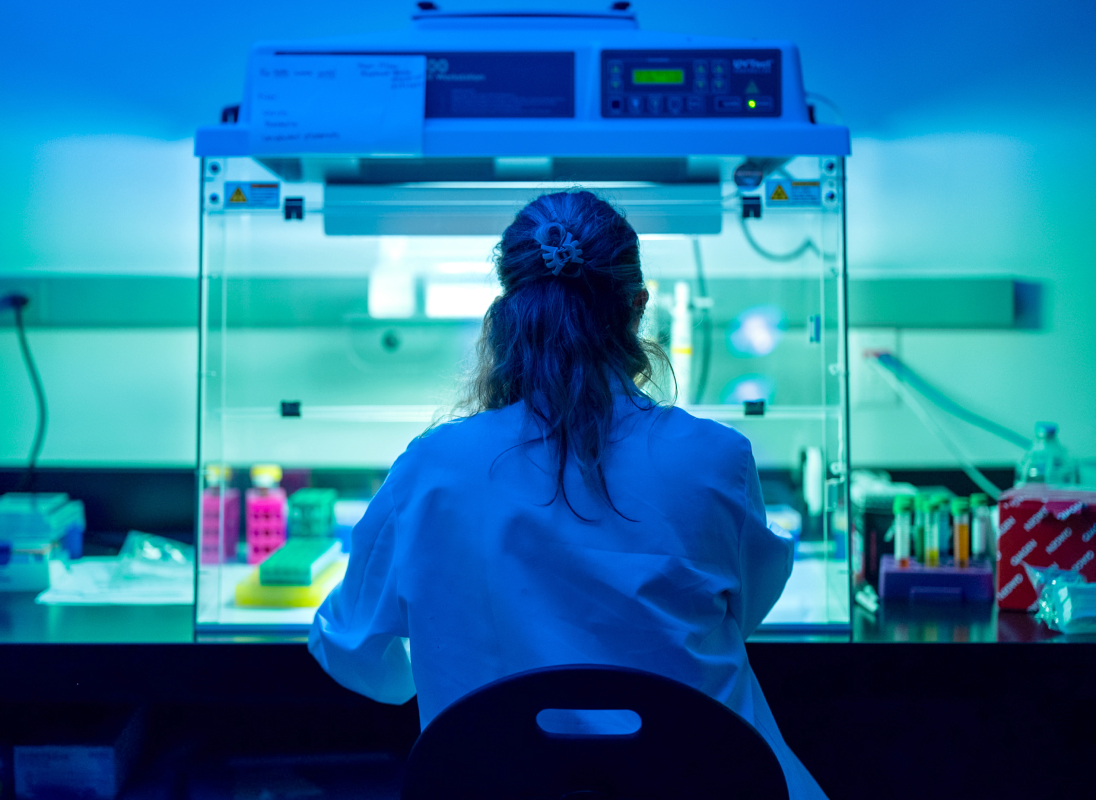
Uncover our impact

More from NEI

  • NEI History

    For more than 50 years, NEI has been at the cutting edge of vision research and outreach to help the public keep their eyes healthy.

  • Research Priorities

    Our research is focused on the leading causes of blindness and impaired vision. NEI supports research, trials, studies, and career development in these critical categories. NEI-funded research is being conducted at over 150 institutions worldwide.

Last updated: April 9, 2026