

Thanks to the work of NEI scientists and grantees, we’re constantly learning new information about the causes and treatment of vision disorders. Get the latest updates about their work — along with other news about NEI.
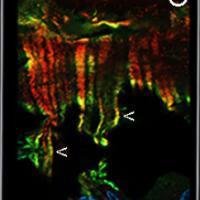
Researchers at the University of California, Berkeley, have found that a drug once widely used to wean alcoholics off of drinking helps to improve sight in mice with retinal degeneration.
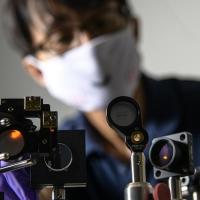
Biomedical engineering and optical sciences professor DK Kang is developing a way to diagnose and treat corneal ulcers that's eight times cheaper and 20 times faster than today's gold standard.
Researchers improved vision in a type 2 diabetes mouse model by reprogramming blood cells into endothelial cells with vessel reparative properties similar to endothelial colony forming cells.
Protein sigma 1 receptor, which is known to protect cells from stress, appears key to the function and survival of retinal ganglion cells (RGCs) in culture.
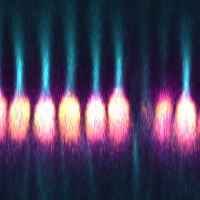
Researchers at the National Eye Institute (NEI) have discovered that power-producing organelles in the eye’s photoreceptor cells, called mitochondria, function as microlenses that help channel light to these cells’ outer segments.
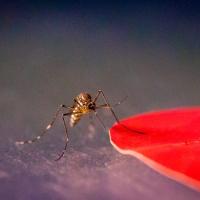
New research led by scientists at the University of Washington indicates that a common mosquito species — after detecting a telltale gas that we exhale — flies toward specific colors, including red, orange, black and cyan.
A Stanford scientist and his colleagues show that patients fitted with a chip in their eye are able to integrate what the chip “sees” with objects their natural peripheral vision detects.