
Thanks to the work of NEI scientists and grantees, we’re constantly learning new information about the causes and treatment of vision disorders. Get the latest updates about their work — along with other news about NEI.
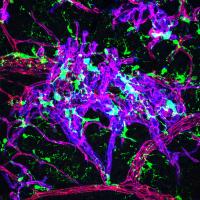
When the eye isn’t getting enough oxygen in the face of common conditions like premature birth or diabetes, it can result in blindness. Scientists have identified new points where they may be able to enable recovery.
Scientists at the University of Wisconsin‒Madison have published a proof-of-concept method to correct an inherited form of macular degeneration that causes blindness, and that is currently untreatable.
University of Michigan researchers have dramatically reduced the power requirements of neural interfaces while improving their accuracy—a discovery that could lead to long-lasting brain implants.
Researchers have shown for the first time that when one optic nerve in the eye is damaged, as in glaucoma, the opposite optic nerve comes to the rescue by sharing its metabolic energy.
Researchers have discovered a strategy that can potentially address a major challenge to the current treatment for choroidal neovascularization (CNV), an aggressive form of age-related macular degeneration.
A new study found that special patented glasses engineered with technically advanced spectral notch filters enhance color vision for those with the most common types of red-green color vision deficiency (“anomalous trichromacy”).
A new study led by researchers at Harvard Medical School and the VA Boston Healthcare System shows that face blindness may arise from deficits beyond visual perception and appears to involve glitches in retrieving various contextual cues from memory.
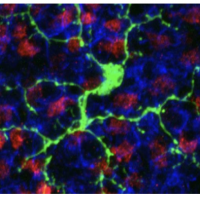
The key components of electrical connections between light receptors in the eye and the impact of these connections on the early steps of visual signal processing have been identified for the first time.