



Thanks to the work of NEI scientists and grantees, we’re constantly learning new information about the causes and treatment of vision disorders. Get the latest updates about their work — along with other news about NEI.
Scientists have identified a protein in the visual system of mice that appears to be key for stabilizing the body’s circadian rhythms by buffering the brain’s response to light.
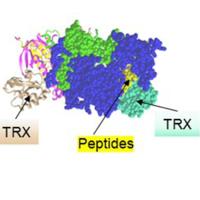
Researchers at Louisiana State University have identified a new mechanism that protects against the excessive oxidative stress that precedes the development of neurodegenerative diseases of the brain and eye.
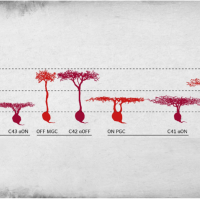
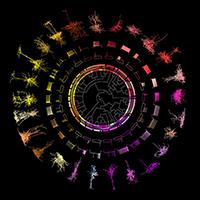
In a comparative analysis across animals of the many cell types in the retina, researchers concluded that most cell types have an ancient evolutionary history.
Researchers at the National Eye Institute have mapped the 3D organization of genetic material of key developmental stages of human retinal formation, using intricate models of a retina grown in the lab.
Wilmer Eye Institute researchers at Johns Hopkins Medicine have found how oxidative stress and the protein HIF-1 contributes to what kind of age-related macular degeneration (AMD) a patient could develop.
Using atomic force microscopy, researchers at Doheny Eye Institute, an affiliate of University of California Los Angeles, discovered retinal capillary stiffening in diabetic mice that is causally linked to the development of retinopathy
David Williams, Donald Miller, and Austin Roorda, received recognition for the development of instruments that use adaptive optics technologies to capture high-resolution images of the retina.
A multidisciplinary team led by researchers at the Schepens Eye Research Institute of Mass Eye and Ear has identified a promising new strategy for glaucoma cell replacement therapy.