

Skip to content

NEI Research News

Thanks to the work of NEI scientists and grantees, we’re constantly learning new information about the causes and treatment of vision disorders. Get the latest updates about their work — along with other news about NEI.

Source
489 items
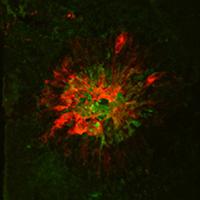
Image shows cone cells, labeled in red.

Turning back the clock on a severe vision disorder

Scientists at the University of Pennsylvania School of Veterinary Medicine report findings of a gene therapy to treat a severe form of Leber congenital amaurosis, caused by mutations in the NPHP5 gene.
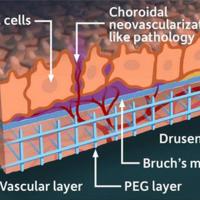
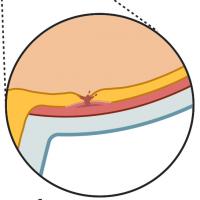
Retina model shows RPE cells, choroidal neovascularization-like pathology, vascular layer, PEG layer, Bruch's membrane, drusen

First-ever lab model of human eye offers hope for macular degeneration patients

NEI-funded research at the University of Rochester has led to the development of a 3D lab model that mimics the part of the human retina affected in age-related macular degeneration.

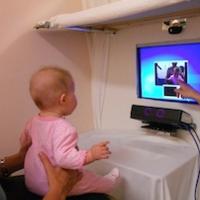
Sign-language exposure impacts infants as young as 5 months old

While it isn’t surprising that infants and children love to look at people’s movements and faces, recent research from Rochester Institute of Technology studies exactly where they look when they see someone using sign language.
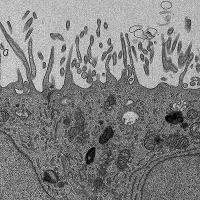
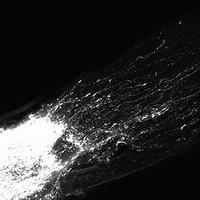
Grey scale electron microscopy image of human retinal cells.

New genetic links found to rare eye disease, opening the door to better diagnostics and potential treatments

NEI-funded research at Scripps Research Institute has turned up more than a dozen gene variants linked to MacTel, a rare eye disease. The variants are likely causing the condition to develop and worsen for a significant share of patients.

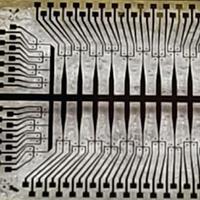
Artificial Neuron Device Could Shrink Energy Use and Size of Neural Network Hardware

Training neural networks to perform tasks, such as recognizing images or navigating self-driving cars, could one day require less computing power and hardware thanks to a new artificial neuron device.

Yale team finds dozens of genes that block regeneration of neurons

In a massive screen of 400 mouse genes, Yale School of Medicine researchers have identified 40 genes actively involved in suppression of axon regeneration in central nervous system cells.

Research points to new hope for treatment-resistant AMD

The latest research from the John A. Moran Eye Center reveals how an oxidized form of cholesterol can change choroidal endothelial cells into cells that become scars and may wreak havoc in the eyes of age-related macular degeneration (AMD) patients.
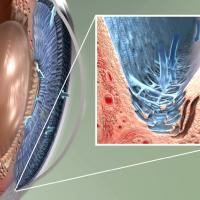
Illustration of the front of the eye

International Team Identifies 127 Glaucoma Genes in Largest Study of Its Kind

Researchers for the first time analyzed genes in more than 34,000 people with glaucoma across multiple ancestries and found 44 new genetic variants that may lead to new treatment targets.

New therapeutic approach may help treat age-related macular degeneration effectively

Scientists have found that RUNX1 inhibition presents a new therapeutic approach in the treatment of age-related macular degeneration (AMD), which is the leading cause of blindness in the elderly worldwide.

Mount Sinai Researchers Uncover a Neural Pathway that is Critical to Correcting Behavioral Errors Relevant to Many Psychiatric Disorders

Mount Sinai researchers have identified a neural pathway through which the brain detects errors and guides subsequent behavioral improvement.